Why Polyurea Is Replacing Epoxy on Hawaii Concrete Floors
- Home
Jessica C. Dills
- 0
- 8 minutes read
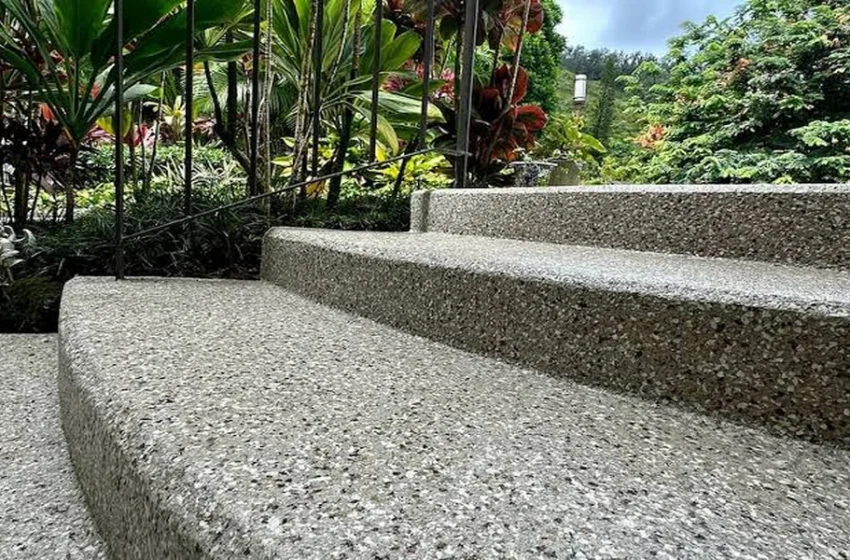
Epoxy floors fail in Hawaii more often than they succeed, and the reason is almost never the installer. It is the material.
Ultraviolet light and salt air tear epoxy apart. It chalks, yellows, and peels within a couple of years on a sunny slab, which is basically every slab in the islands. If you have watched a glossy garage floor turn into a chalky, flaking mess, you already know how expensive that lesson feels.
Polyurea coatings are the answer most flooring professionals now give, and once you understand why, the choice stops being a toss-up. This piece breaks down how polyurea behaves, where it makes sense on your property, and how to pick an installer without getting burned.
What Actually Kills an Epoxy Floor Here
Two things, and they work together.
The first is the sun. Epoxy is not UV stable, so constant exposure breaks down the resin at the surface. You get a dull, amber tint that no amount of cleaning fixes. The second is moisture. Concrete slabs sit on soil that stays damp, and when vapor pressure builds under a coating that cannot flex, the floor blisters. Tiny bubbles turn into peeling sheets. Near the ocean you can add salt spray to the list, and salt is patient.
According to the University of Hawaii, the state’s year-round intensity of solar radiation ranks among the highest recorded anywhere in the United States. That single fact explains why coatings that hold up fine in cooler climates age so quickly on Oahu.
Polyurea vs. Epoxy: The Honest Comparison
Polyurea is the newer chemistry, and it outperforms epoxy on nearly every measure that matters for outdoor and heavy-use floors. Here is how the two stack up.
| Factor | Epoxy | Polyurea |
|---|---|---|
| UV stability | Yellows and chalks in direct sun | Holds color without fading |
| Moisture tolerance | Sensitive to slab vapor | Cures fast, tolerates damp concrete |
| Flexibility | Rigid, cracks with movement | Flexes with the slab |
| Return to service | Often several days | Typically about one day |
| Temperature range at install | Needs moderate conditions | Applies across a wider range |
That last row matters more than people expect in Hawaii. A product that needs cool, dry conditions to cure correctly is a gamble when afternoon humidity climbs. Polyurea’s tolerance for real-world conditions is the practical reason installers switched.
Which Surfaces Benefit Most on Your Property
Start with the garage. It takes tire heat, oil drips, dropped tools, and sun through an open door. Polyurea handles all four, and the one-day turnaround means you are not parking on the street for a week.
Driveways are the brutal test. They face full sun, rain runoff, and the weight of vehicles every single day. This is where epoxy gives up fastest, and where a UV-stable coating earns its cost.
Patios, lanais, and pool decks have their own demands. You want texture for bare feet when wet, color that survives the sun, and a surface that will not get dangerously slick. A flake or chip broadcast gives you grip without looking industrial.
Commercial spaces follow similar logic. A restaurant kitchen, a warehouse aisle, or a school hallway all need a floor that resists chemicals and cleans up fast. Water resistance and easy cleaning are why food and beverage facilities use these systems so widely, a point the EPA makes about the importance of cleanable, well-sealed surfaces in food handling areas.
How to Vet an Installer Before You Sign
Carbide grinding, diamond prep, moisture testing, and climate-adjusted mixing windows all decide how long your floor lasts, and none of them show up in a glossy brochure. So skip the flyers and check the substance. Walk through this before you hand over a deposit.
- Ask what brand of material they install, then confirm they are actually certified by that manufacturer.
- Ask what surface preparation they perform. “Pressure wash and roll” is not preparation.
- Ask for a moisture test on your slab. If they skip this, walk away.
- Read the warranty language. A limited lifetime warranty means something only if the manufacturer backs it, not just the contractor.
- Visit a floor they installed at least three years ago. Sun damage shows up early here.
Manufacturers publish installation standards for their own systems, and the National Institute of Standards and Technology maintains documented test methods for coating adhesion and surface preparation. A contractor who can talk through those steps without a script is usually the one you want.
This is also where a company’s niche matters. Someone who coats garage, patio, and driveway floor coating experts‘ type of work every week, on the same island, in the same climate, has already made the mistakes on someone else’s slab. Ask how many residential jobs they have completed on Oahu specifically. Local repetition beats national branding.
What It Costs and How to Budget
Coating a two-car garage typically runs a few thousand dollars, with driveways and large commercial floors priced by square foot. Flake and chip finishes cost more than solid color because of material and labor. Metallic looks cost more still.
Compare that against the alternative. Bare concrete in Hawaii cracks, stains, and slowly turns into a maintenance problem. Resurfacing or replacing a slab costs multiples of what a coating does, and you still need to coat the new surface afterward. A coating is the cheaper decision over a ten-year window, and I would argue it is the only one that makes financial sense if you plan to stay in the house.
One more budget note: a lifetime warranty only pays off if the manufacturer is still around and the installer documented the job properly. Keep your paperwork.
Do It Once, Then Forget About It
The mistake most homeowners make is treating floor coating as a cosmetic purchase. It is a durability purchase wearing a cosmetic disguise. Pick the chemistry that survives your climate, verify the installer’s prep work, and confirm the warranty is real. Do those three things and your floor looks the same in year seven as it did in week one.
If your slab is cracked, stained, or just tired, get a few local quotes, ask hard questions about prep and materials, and pick the crew that gives you straight answers. Your concrete is not going anywhere. You might as well give it a surface that stays.
