Why Miami Became America’s Capital of Personal Reinvention
- Lifestyle
Gregory M. Stonge
- 0
- 9 minutes read
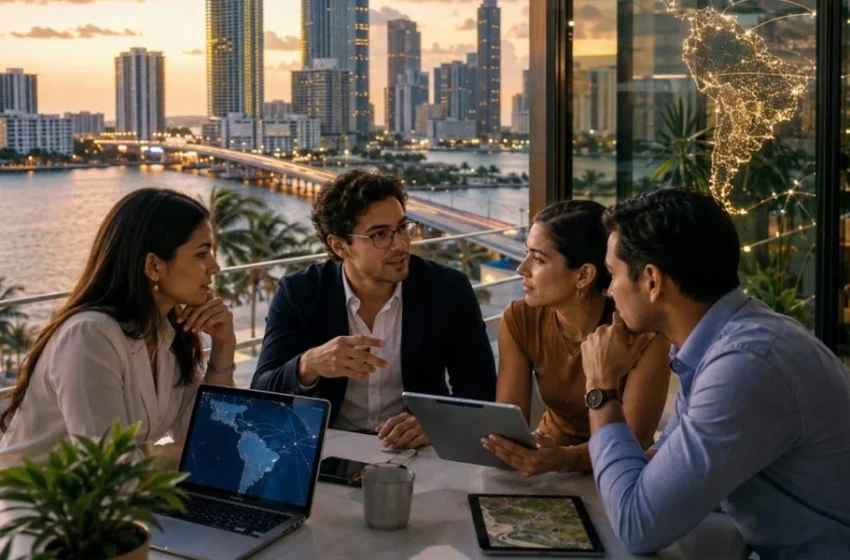
No other American city sells transformation quite like Miami does. Not Las Vegas, not Los Angeles, not New York. Miami’s entire identity is built around the idea that you can arrive as one version of yourself and leave as something better, bolder, and more alive. That’s not an accident. It’s the product of decades of cultural collision, economic hustle, and a climate that makes hiding under layers of clothing genuinely impractical.
This is a city that turned a subtropical swamp into a global style capital. Understanding how it did that tells you a lot about what Miami really is, and why people keep choosing it as the backdrop for their most significant personal changes.
The Latin American Influence That Rewired Miami’s Aesthetic DNA
Miami’s reinvention instinct has deep roots. Starting in the 1960s, successive waves of Cuban, Colombian, Venezuelan, and Brazilian immigrants brought with them a specific cultural value: the body as a canvas, appearance as a statement of pride and resilience. These weren’t communities that had the luxury of being neutral about how they looked. Presentation mattered because it communicated status, survival, and belonging all at once.
That sensibility didn’t stay behind closed doors. It filtered into local business, local fashion, and eventually the city’s entire service economy. The neighborhoods that grew out of those communities, from Little Havana to Wynwood to Brickell, each carry a version of that original aesthetic ambition. When you walk through any of them today, you feel it: Miami is a city where looking like you’ve invested in yourself is the baseline, not the exception.
The fashion industry noticed early. A 2019 report from the U.S. Joint Economic Committee found that fashion is a $2.5 trillion global industry employing more than 1.8 million people in the United States alone, and Miami’s role in that ecosystem has grown steadily as the city became a gateway between North American consumers and Latin American designers, manufacturers, and buyers.
Miami’s Creative Economy Is Not a Side Project
People outside Florida sometimes treat Miami’s creative scene as glamorous window dressing on top of a real estate and finance city. That reading misses the numbers entirely.
According to the Miami-Dade Beacon Council, Miami’s creative industries employ 31,500 people and generate $2.1 billion in local economic activity, with average sector earnings of $91,000. Those aren’t tourism-adjacent jobs selling T-shirts on the boardwalk. That’s a substantial professional workforce whose output shapes how the city looks and how it presents itself to the world.
Fashion is a significant piece of that. Miami Fashion Week draws international buyers and press. The Miami Design District competes directly with Rodeo Drive and Fifth Avenue for luxury retail. Brands like Dior and Louis Vuitton have chosen Miami as a backdrop for major collection reveals, not Paris. That’s a signal about where cultural gravity is shifting, not a fluke.
And here’s the thing: fashion and personal aesthetics in Miami aren’t separate markets. They feed each other constantly. When the city’s creative economy raises the visual standard of daily life, the demand for every kind of personal presentation service rises with it. That includes fitness studios, skincare clinics, hair and nail salons, and the full spectrum of aesthetic services. People who move to Miami or visit for extended periods often describe feeling a low-grade social pressure to match the city’s energy. That pressure is real, and it’s economically productive.
Tourism Brings the World to Miami’s Reinvention Economy
You can’t talk about Miami’s reinvention culture without talking about who actually shows up here. The numbers are staggering. According to WLRN, South Florida’s public radio station reporting on Greater Miami Convention and Visitors Bureau data, over 28 million people visited Miami-Dade County in 2024, a new record for the region. That’s roughly the entire population of Texas walking through one metropolitan area in a single year.
A meaningful share of those visitors aren’t just coming for the beach. They’re medical tourists, aesthetics tourists, and wellness tourists who book procedures, treatments, or consultations as part of their trip. Miami’s combination of world-class practitioners, competitive pricing compared to other major cities, and the natural appeal of recovery in a warm, beautiful environment makes it a logical destination. Someone researching brachioplasty in Miami, for example, is often factoring in the city itself as part of the decision, not just the clinic’s credentials.
That tourism-to-aesthetics pipeline is real and growing. It’s one reason Miami’s personal care and medical aesthetics market is disproportionately large relative to the city’s permanent population.
The Reinvention Pyramid: How Miami’s Culture of Change Actually Works
Here’s a framework worth naming: call it the Reinvention Pyramid. At the base sits climate and context, Miami’s year-round warmth and its social permission to be visible. Visible skin, visible effort, visible change. One layer up sits community and influence, the Latin American aesthetic values, the influencer economy, the fashion and art scenes that establish what “looking good” means locally. At the top sits access and execution, the actual practitioners, studios, clinics, and services that make transformation possible.
Most cities have the base. A few have the middle layer. Miami is rare in having all three stacked and reinforcing each other. That’s why someone who moves here from, say, Cleveland often describes a shift in their relationship with their own appearance within the first year. It’s not vanity. It’s cultural alignment. Miami’s environment actively rewards the investment in self-presentation in ways that most American cities don’t.
What This Means if You’re Thinking About Coming to Miami for Aesthetic Services
The practical upshot of all this cultural context is that Miami’s aesthetic service market is genuinely competitive in a good way. Because demand is so high and the city’s reputation as a destination for personal transformation is so strong, practitioners here tend to build deep specialization. The market punishes mediocrity quickly because clients have real options and share experiences freely.
So if you’re comparing cities for a procedure or treatment you’ve been considering, Miami’s ecosystem offers something beyond just the procedure itself. You get the recovery environment, the cultural reinforcement, and the genuine concentration of expertise that comes from a market that has been running at high volume for years.
A few things worth considering before you book:
- Research your practitioner’s board certifications independently, not just through the clinic’s website.
- Factor recovery time into your trip length. Most aesthetic procedures need more downtime than people plan for.
- Look at before-and-after portfolios for your specific concern, not just general work.
- Ask about what happens if follow-up care is needed after you return home.
A City That Takes Self-Investment Seriously
Miami didn’t become America’s capital of personal reinvention because it markets itself that way. It got there because its culture, economy, and population density of both practitioners and clients created genuine conditions for transformation. Fashion built the visual standard. Tourism brought the clients. Latin American cultural values made appearance a form of self-respect rather than vanity.
The city will keep evolving, but this core identity is durable. If you’ve been sitting on a decision about some kind of personal change, whether that’s a wardrobe overhaul, a fitness commitment, or an aesthetic procedure you’ve been researching, Miami has a funny way of making you feel like now is exactly the right time.
“While the data suggests that the drastic growth of plastic surgery during the immediate post-pandemic period has stabilized, the demand for aesthetic procedures remains comparatively robust,” noted ASPS President Steven Williams, MD, in commentary on the organization’s 2023 procedural statistics report, reflecting a broader consumer trend toward prioritizing appearance as part of overall personal wellness.
That trend has a home. And increasingly, that home is Miami.
