That Chipped Gel Manicure You Picked At Probably Did More Damage Than the Gel Itself
- Beauty
Clare Louise
- 0
- 6 minutes read
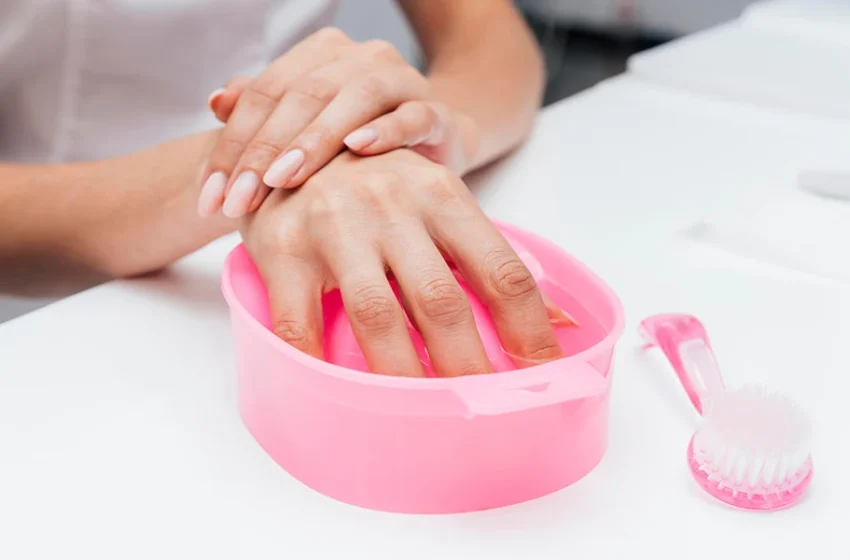
Image Recommendation: A close-up of a hand with glossy gel-manicured nails, soaking in a small bowl, with foil-wrapped acetone pads nearby.
Picking at a lifted edge of gel polish feels harmless, almost satisfying. What actually comes away with it isn’t just the coloured layer on top. Gel adheres so firmly to the nail that peeling it off by hand usually takes a thin layer of the real nail plate along with it, which is a big part of why nails can look ridged, thin, or weak after a few rounds of gel.
What’s Really Being Removed When Gel Lifts Early
A properly done gel manicure in Singapore is meant to come off through a slow acetone soak, not a manual peel. The gentler method involves acetone-soaked cotton pressed against each nail and wrapped in foil for around 10 to 15 minutes, until the polish has softened enough to lift away with light pressure rather than force. Picking at a corner that’s already loose skips that soak entirely, which means the polish is still firmly bonded everywhere else and takes nail tissue with it when it finally gives way.
That’s also why a gel manicure that’s over-cured or applied too thickly can become genuinely harder to remove safely, since a technician may need more aggressive filing to break through a stubborn top coat, and more filing against the nail itself means more thinning over time.
Gentle Removal Compared to the Shortcut Version
| Removal approach | What it actually does |
| Acetone soak with foil wrap | Softens the polish gradually so it lifts with minimal pressure |
| Picking at a lifted edge | Pulls away bonded polish along with thin layers of the nail plate |
| Filing it straight off | Wears down the nail surface directly underneath the polish |
The difference between those two columns isn’t subtle once nails start to show it, since a soak-based removal leaves the nail surface more or less intact, while the other two routes chip away at it a little more each time.
What to Ask Before Choosing a Nail Salon
Not every nail salon in Singapore removes gel the same careful way, so it’s worth asking directly how a salon handles removal before booking, rather than finding out halfway through an appointment. A technician who’s upfront about soak times and willing to skip harsh filing is usually also the one paying attention to the rest of the service, and that attention tends to show up in small details like how carefully the cuticles are handled or how clean the tools look before a session even starts.
What a Good Salon Visit Looks Like From Start to Finish
- The technician does a proper acetone soak for removal rather than filing or peeling the old gel straight off.
- Cuticle trimming is gentle or skipped entirely, since aggressive cuticle cutting is a common source of inflammation and infection.
- Tools look clean and are either disposable or visibly sterilised between clients.
The Curing Lamp Deserves a Bit of Caution Too
Gel polish doesn’t air-dry the way regular polish does. It needs to be cured under a UV or LED lamp, and that light sits in the same UVA range dermatologists warn about for everyday sun exposure. A few minutes under the lamp every few weeks is a small amount of exposure on its own, but it adds up over years of regular manicures. Slipping on a pair of fingertip-less UV-blocking gloves before curing, or applying sunscreen to the hands beforehand, is a simple habit that costs nothing extra at the appointment and takes only a moment to put on.
How Long Should Nails Get a Break Between Gel Manicures?
There’s no fixed number of weeks that works for everyone, but most guidance comes down to treating gel as an occasional treatment rather than something to repeat appointment after appointment without a gap. Giving the nail plate a stretch of time to rehydrate and recover between sessions, even just a few weeks bare or with a nourishing oil, makes a noticeable difference in how nails hold up over months of regular manicures. Nails that look visibly thin, ridged, or flaky straight after a removal are usually asking for a longer break than usual before the next appointment.
None of this means gel manicures are something to avoid. It just means the part that actually wears nails down usually isn’t the gel polish itself, it’s what happens in the few minutes before and after it’s on. A technician who takes that part seriously, and a bit of patience between appointments, is usually all it takes to keep nails looking glossy without the thinning that gives gel manicures a bad reputation.
Booking an appointment with a technician who takes removal seriously makes the biggest difference long term. Visit Glamour Plus to find out more about their gel manicure and nail care services.
